EXISTING IN-THE-WORLD
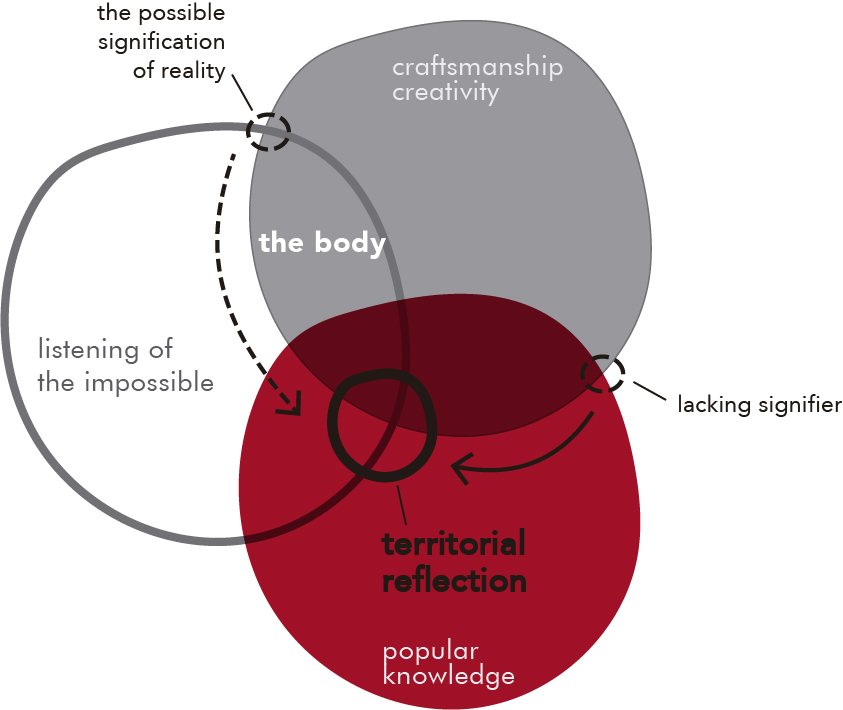
The stigmatization of informal/popular neighborhoods in Latin America is a common occurrence. While it cannot be denied that marked situations of violence and crime exist, it is rather the contradiction between a place with these characteristics and a history of resistance, struggle, and creative resourcefulness to produce a habitable space that directly impacts well-being by making it difficult to appropriate the territory—that is, when dwelling in the city becomes impossible. Researching the history of the place would allow for another reading of the territory, one not driven by contradiction but by the resistance and creative resourcefulness inherent to informal/popular neighborhoods. This would allow for the discovery of alternative forms of symbolic bond with the city (another possible signification of reality), which implies a positioning (of the body in relation to the territory) that impacts the ideal of dwelling.
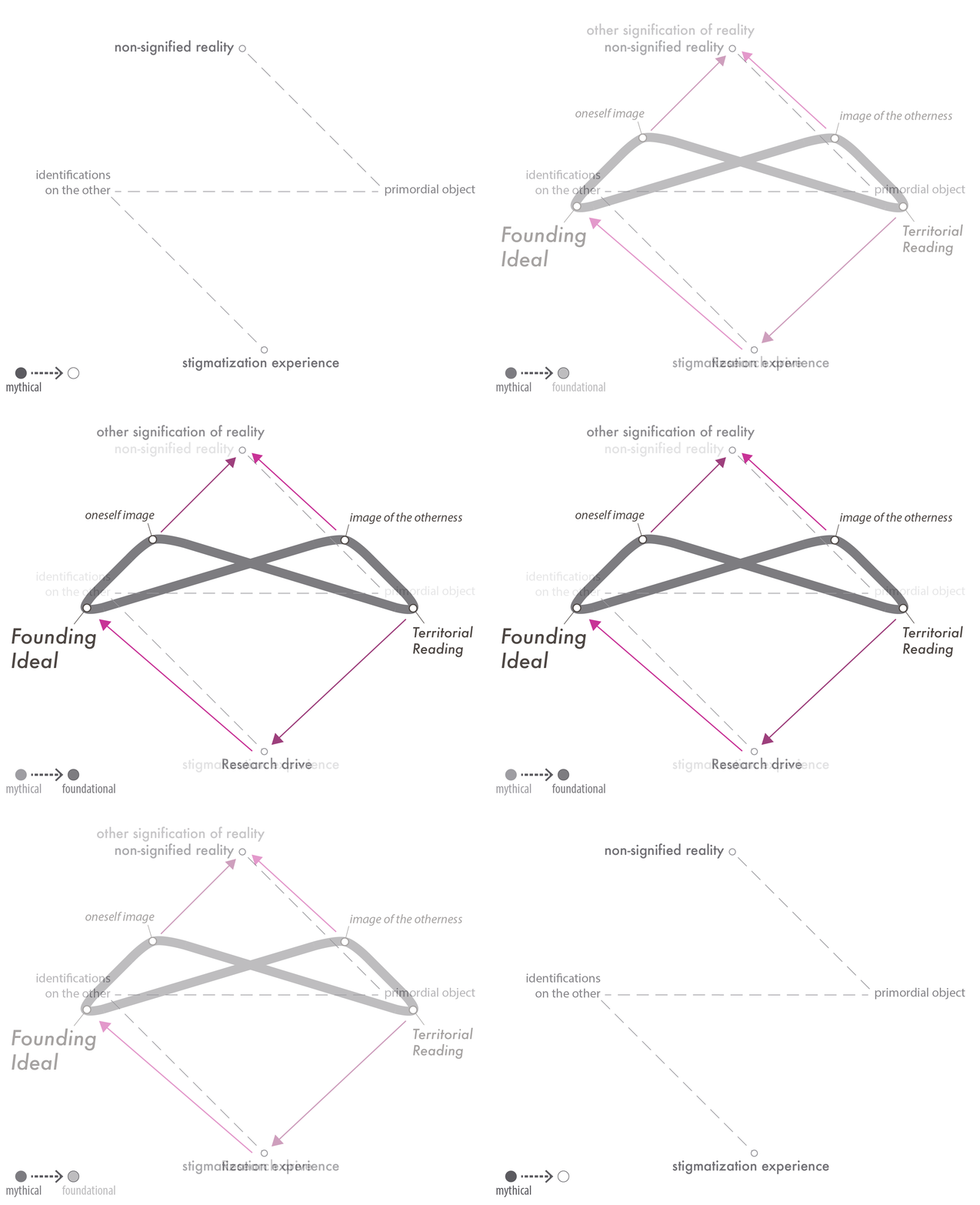
EXISTING IN-THE-WORLD. The stigmatization of informal/popular neighborhoods in Latin America is a common occurrence. While it cannot be denied that marked situations of violence and crime exist, it is rather the contradiction between a place with these characteristics and a history of resistance, struggle, and creative resourcefulness to produce a habitable space that directly impacts well-being by making it difficult to appropriate the territory—that is, when dwelling in the city becomes impossible. Researching the history of the place would allow for another reading of the territory, one not driven by contradiction but by the resistance and creative resourcefulness inherent to informal/popular neighborhoods. This would allow for the discovery of alternative forms of symbolic bond with the city (another possible signification of reality), which implies a positioning (of the body in relation to the territory) that impacts the ideal of dwelling.